
The medicare prescription payment plan is a voluntary payment option that allows Part D enrollees to spread their out-of-pocket drug costs into monthly installments over the year. While this program helps manage monthly cash flow, it does not actually lower your total drug expenses or reduce the price of your prescriptions. It is most beneficial for individuals who reach the annual out-of-pocket limit early and want to avoid large pharmacy bills.
For many Medicare beneficiaries, the first trip to the pharmacy in January often results in a significant financial burden due to high deductibles and initial coverage phases. The Medicare Prescription Payment Plan was introduced to address these sudden spikes in out of pocket costs, yet much of the current discussion overlooks a critical distinction between cash flow management and genuine savings. While this program offers a mechanism to distribute expenses evenly throughout the year, it does not lower the total amount you owe for your medications. At Evergreen Advisors, we believe financial clarity is the foundation of a secure retirement. This guide examines the mechanics of this process, explains why the plan will not reduce your annual drug spend, and outlines specific regional resources, such as Pennsylvania’s PACE program, that offer tangible cost reductions for Erie seniors.
What is the Medicare Prescription Payment Plan (M3P)?
The Medicare Prescription Payment Plan is a voluntary option created by the Inflation Reduction Act to help seniors manage their healthcare budgets. Often referred to as a smoothing program, it changes how you pay for your medications rather than how much you pay. For many Erie residents, the beginning of the year often brings high out of pocket costs due to deductibles and expensive initial fills. This program allows you to pay $0 at the pharmacy counter for covered Part D drugs and instead receive a monthly bill from your plan sponsor.
It is important to understand that this is a payment arrangement rather than a new type of insurance coverage. When we provide custom Medicare enrollment for our local clients, we emphasize that this plan does not replace your Part D or Medicare Advantage plan. Instead, it acts as a financial tool to distribute your out of pocket costs more evenly across the remaining months of the calendar year. While this can provide steady support for your monthly household budget, it does not change your plan's formulary, your premium, or the total amount you owe. We are always searching high and low for ways to save you money on your prescriptions, and understanding that the medicare prescription payment plan is a budgeting tool rather than a discount program is the first step in managing your healthcare expenses.
How the Smoothing Process Works at the Pharmacy
Once you opt into the medicare prescription payment plan, the transaction at the pharmacy counter becomes a $0 event for any drug covered by Part D. When you fill your prescriptions at a local Erie pharmacy or through a mail-order service, you will not pay your plan sponsor's cost-sharing amount at the point of sale. Instead, your Part D sponsor, such as UPMC, Humana, or plans affiliated with the AHN network, pays the pharmacy directly and sends you a monthly bill for your portion of the cost.
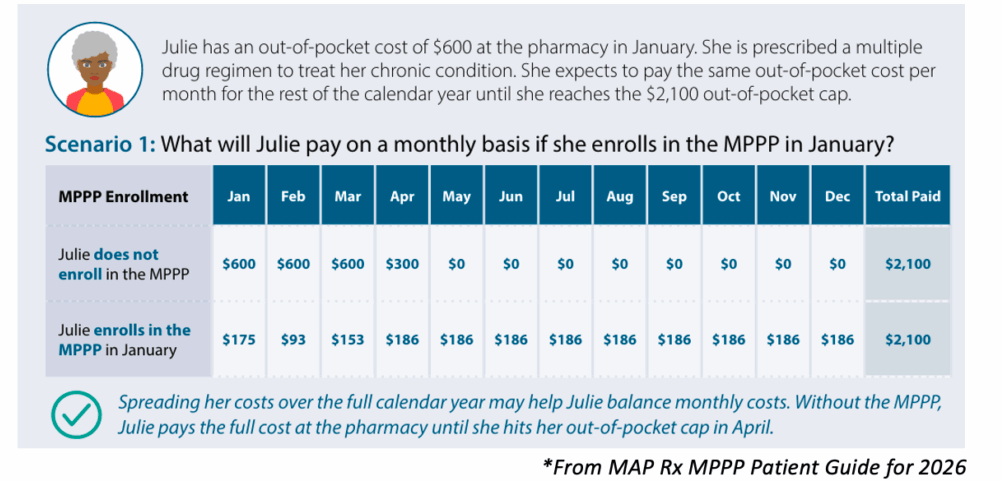
The smoothing process uses a specific formula to determine your monthly payment. Each month, your plan takes any new out-of-pocket costs you have incurred and adds them to your previous unpaid balance. They then divide that total by the number of months remaining in the calendar year. For instance, if you incur a high cost in January, that amount is spread across the remaining 11 months. If you add a new medication in April, the plan recalculates your balance and divides it by the remaining nine months. This is why your monthly bill may change throughout the year; it is not a fixed installment like a car payment.
Calculation Component | How It Is Determined |
|---|---|
Monthly Balance | New out-of-pocket costs plus any remaining balance from previous months |
Remaining Months | The number of months left in the calendar year, including the current month |
Monthly Payment | Total balance divided by the remaining months |
When we provide custom Medicare enrollment for our neighbors, we remind them that this payment arrangement is entirely separate from the monthly plan premium. You must continue to pay your insurance premium to keep your coverage active. Because these monthly bills can vary significantly based on the timing of your refills, we help our clients monitor their spending. If the smoothing process does not provide enough relief, we will search for other programs that can lower or even eliminate your prescription costs more effectively than a payment plan alone.
The Truth About Savings: Why this Plan Will Not Lower Your Total Drug Costs

The most common misconception we encounter at Evergreen Advisors is the belief that the medicare prescription payment plan functions as a discount program. It is vital to understand that this plan does not save you a single penny on the actual cost of your medications. It does not lower your monthly premiums, reduce your co-pays, or change the price the pharmacy charges for your prescriptions.
Instead, it is strictly a budgeting tool designed to rearrange the timing of your payments.
Think of this program as a 0% interest line of credit reserved exclusively for your pharmacy co-pays. When you participate, you are essentially deferring payment from the moment you pick up your medication to a later date. By the time December 31st arrives, the total amount you have paid out of pocket will be exactly the same as if you had paid at the pharmacy counter every time. If your annual drug costs total $1,800, you will pay $1,800 under this plan; the only difference is that you might pay $150 every month instead of a $600 lump sum in January followed by smaller amounts later.
Feature | Standard Part D Payment | Medicare Prescription Payment Plan |
|---|---|---|
Total Annual Drug Cost | Actual cost based on tier | Exact same total amount |
Interest or Fees | $0 | $0 |
Point of Sale Cost | Full co-pay amount | $0 at the counter |
Monthly Billing | None for drugs (premium only) | Monthly bill for drug costs |
Because this is not a savings vehicle, we always focus on our clients holistically to ensure they are not just shifting debt around. While smoothing your costs can help with cash flow, we are constantly searching high and low for ways to save you money by looking at actual cost reduction programs.
Shifting a high bill across twelve months is helpful for some, but finding a way to reduce the underlying cost of the drug through other assistance programs is our primary goal for Erie For seniors considering this program, it is important to understand a major potential drawback. If you are prescribed new, expensive medications partway through the year, your remaining monthly payments will increase significantly. This sudden spike in costs is the greatest risk associated with the plan, which is why we advise using it sparingly. Instead of relying solely on this option, we recommend exploring other savings opportunities first. Programs like PACE, Extra Help, or direct manufacturer assistance are often more stable and effective ways to manage your prescription costs..
Understanding the 2026 Medicare Out of Pocket Cap for Erie Seniors

The 2025 and 2026 updates to Part D represent a major shift, but they often lead to confusion between the medicare prescription payment plan and the new universal spending limit. It is important to distinguish the two. Starting in 2025, a firm $2,000 annual out of pocket cap was established for all Medicare drug coverage. In 2026, this cap adjusted to $2,100. This is not a voluntary program; it is a legal limit that applies automatically to every senior with a Part D plan or Medicare Advantage plan with drug coverage.
One of the most significant changes for Erie families is the total elimination of the coverage gap, formerly known as the donut hole. Previously, residents had to navigate a complex set of phases where their costs would suddenly spike mid year. Now, once you reach the annual cap, your responsibility for covered Part D drugs drops to $0 for the remainder of the year.
Year | Annual Out-of-Pocket Cap (on Prescriptions) | Eligibility |
|---|---|---|
2025 | $2,000 | Automatic for all Part D members |
2026 | $2,100 | Automatic for all Part D members |
2027 | $2,400 | Automatic for all Part D members |
We focus on custom Medicare enrollment to ensure our clients understand that you receive this protection regardless of whether you join the payment plan. While the payment plan helps you reach that cap through manageable monthly installments, the cap itself is what provides the actual financial relief. When we are searching high and low for ways to save you money, we start by confirming your plan follows these federal limits correctly to protect your retirement savings.
Who is Most Likely to Benefit from a Medicare Prescription Payment Plan?
Because the annual cap applies regardless of participation, the medicare prescription payment plan is specifically designed for people who face significant out of pocket costs early in the calendar year. The ideal candidate for this program is a senior who usually hits their deductible or enters high cost drug tiers in January or February. For these individuals, the program prevents a massive spike in expenses during the winter months when heating bills and other costs are often at their peak in Erie.
Consider an Erie resident prescribed a high cost blood thinner. If this medication triggers a $545 deductible and a high tier co-pay in January, the total bill at the pharmacy counter could be overwhelming. By using the payment plan, that January burden is divided by 12, making the first month far more manageable. Conversely, a senior who is prescribed an expensive medication in October has only three months remaining in the year to spread that cost, resulting in much higher monthly payments. Furthermore, if you only take low cost generic medications with $5 or $10 co-pays, the smoothing process offers no real benefit and simply adds a layer of monthly billing to your routine.
When we provide custom Medicare enrollment, we analyze your specific medication list to determine if you are likely to benefit based on your expected monthly spend. We are always searching high and low for ways to save you money before recommending a payment arrangement that does not actually reduce your debt.
Actual Ways to Save: Extra Help and PACE Programs in Pennsylvania

While the medicare prescription payment plan is helpful for cash flow, it remains a neutral financial tool rather than a discount. For Erie families struggling with the actual price of their medications, we pivot our focus toward programs that provide tangible discounts. If your income falls within certain ranges, you may qualify for Extra Help, also known as the Low Income Subsidy. This federal program significantly reduces or eliminates your monthly premiums and limits your copays to very low amounts, often rendering the smoothing process unnecessary because your initial costs are already minimized.
In Pennsylvania, we have two excellent resources, PACE and PACENET. These are State Pharmaceutical Assistance Programs that offer secondary coverage for prescription drugs. For many of our clients, these programs can lower their costs to as little as $8 or $15 per prescription, regardless of the drug's retail price. When we provide custom Medicare enrollment, we always cross-reference your household income with current Pennsylvania state guidelines to see if you qualify for these specific benefits.
Program Type | Administration | Primary Benefit |
|---|---|---|
Extra Help (LIS) | Federal (Social Security) | Lowers co-pays and eliminates deductibles |
PACE / PACENET | Pennsylvania State | Secondary coverage with fixed, low co-pays |
Medicaid (Dual-Eligible) | State and Federal | Often reduces drug costs to near zero |
Manufacturer Assistance | Private Pharmaceutical Co. | Discounts for specific brand-name drugs |
If you do not meet the income requirements for state or federal aid, our team will search for manufacturer assistance programs. These are often viewed as a last resort, but they can be a lifeline for specific high-cost brand-name medications. We are always searching high and low for ways to save you money by investigating every available avenue. Our goal is to lower or even eliminate your prescription costs rather than just helping you pay a high bill over a longer period of time.
How to Enroll or Opt Out of the Payment Plan
Participation in the medicare prescription payment plan requires a voluntary opt in through your specific Part D sponsor. Most plans offer an online portal or a paper participation request form to begin the smoothing process. While you can opt out at any time, you must pay the remaining balance of your incurred drug costs when you leave. You will then return to paying for your medications directly at the pharmacy counter.
Maintaining timely payments is critical. A missed payment can lead to your removal from the program, forcing you to pay the full cost-sharing amount at the point of sale for future refills. Before you enroll, we suggest contacting a local Erie agent. We provide custom Medicare enrollment to ensure this billing method aligns with your financial goals. Our priority is always searching high and low for ways to save you money and helping you lower or even eliminate your prescription costs through programs that provide actual savings rather than just payment deferral.